
My birthday approaches. I’m looking forward to a few birthday cards. I don’t know how many cards are sent these days, actually sent by post. People tell me the cost of postage puts them off, which I find odd, given the service the stamp endorses. Someone takes the card, this actual card and it’s borne across the country, pushed through the letter box, lands with a slap on the hall floor. From my hands to his, or hers, or yours. Inside is a handwritten message, clumsily and untidily written – or eloquent and neat – and the very shapes of the letters put me in mind of the sender. This takes more effort than a handful of emojis on a screen. Happy Birthday. Merry Christmas. Deepest Sympathy. Whatever the message, it says most of all ‘I thought of you.’ We put cards on display, sometimes keep them long after they are taken down. They are a tangible demonstration of connection. They emanate a small glow of benevolence.
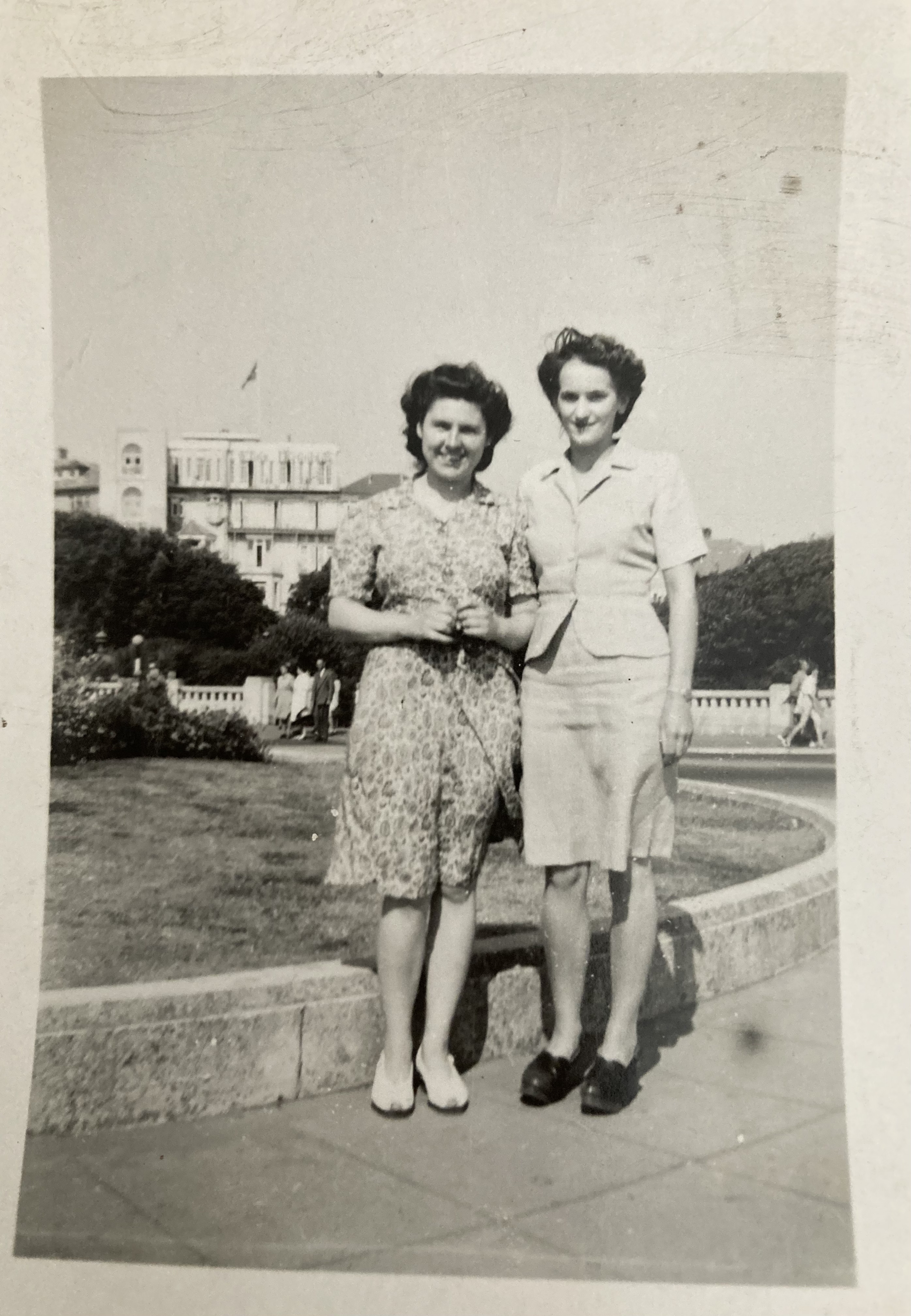
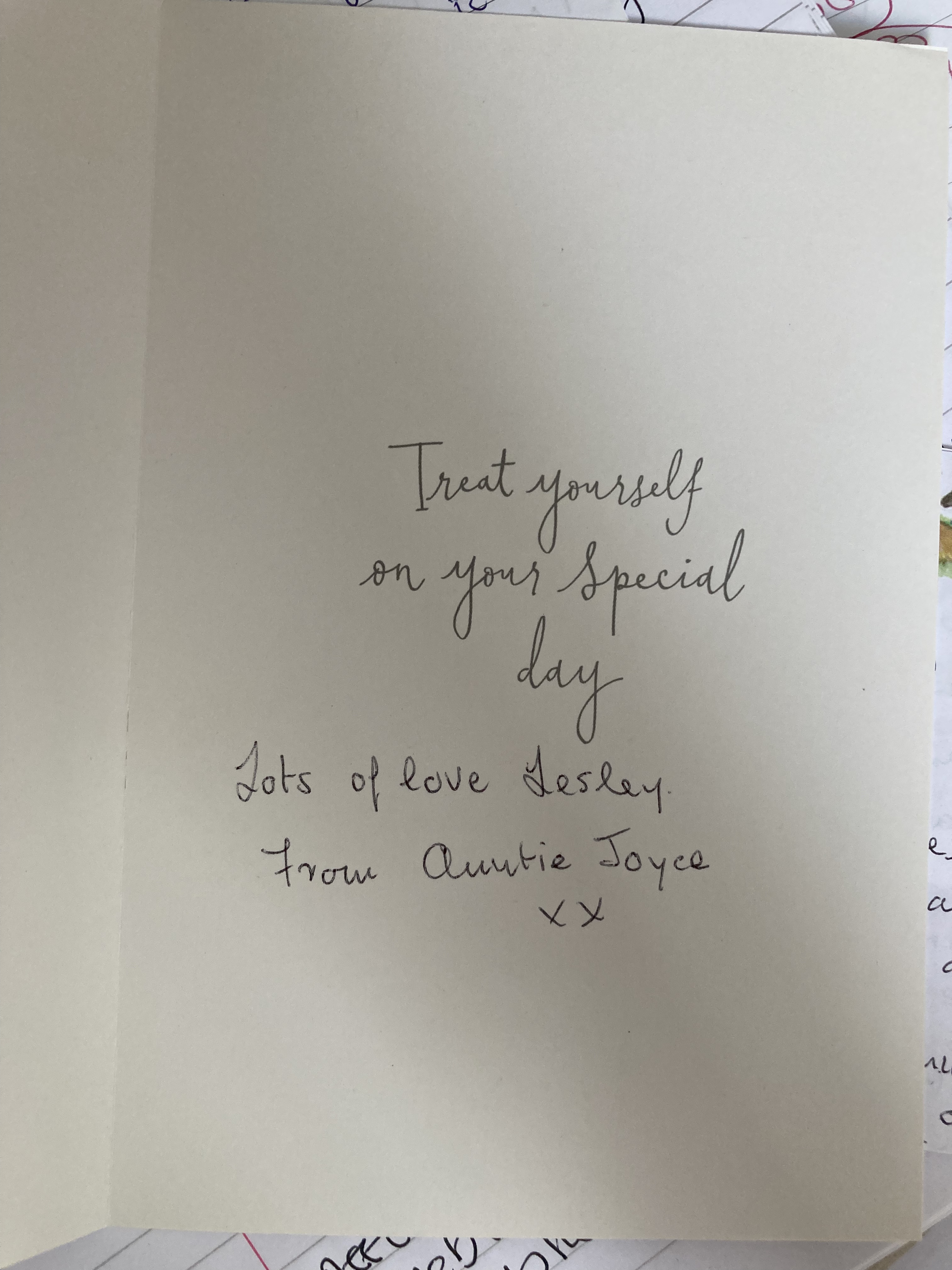
My birthday was always marked by a card from Auntie Joyce. Always. She never forgot a birthday, never once, and was always prompt: her instantly recognisable handwriting on the envelope an infallible herald to the event. She was an auntie by election, as it were – mum’s best friend, met during wartime. It was a friendship sustained throughout their lives by the postal service. Every few weeks, mum would return from the front door with an envelope in her hand. “A letter from Joyce,” she would say, and it would be put aside, as a treat for later. A week or so later she would say, “I must write to Joyce.” And she did.
Mum died thirteen years ago. Joyce continued to send birthday cards to us – my brother, our partners, our children – and I took to sending her one on mum’s behalf. Joyce’s cards became increasingly precious and, of course, as she grew ever older, precarious. My brother and I started WhatsApping each other a photograph of the envelope when it arrived, reassured and rejoicing. More cheerfully than Prufrock and his coffee spoons, we measured out our life in Auntie Joyce’s birthday cards.
Joyce died in April. A peaceful death, at 102. Somehow, when someone is so obviously old, her death so evidently to be expected, it feels that it should matter less. Yet I have not found that to be the case. I went to the funeral and wept copiously. I find it hard to say why. The sense of loss is unexpectedly sharp. Like a fixed star in the moving firmament which finally went dark.
Auntie Joyce was always there. My brother is the only person left who’s been in my life for ever. I’m not decrying the close relationships forged throughout my life, it’s simply there is something about the ones that go right the way back. I’ve lost an anchor to my past.
And Joyce was, of course, a precious link to my mum. Did I love Auntie Joyce for mum’s sake? Yes, undoubtedly. There is a kind of love which grows through the medium of another: we look at the same beloved, our eyes meet and we forge a bond. In these last few years, when I saw Joyce more frequently, I also loved her for herself – her intelligence, sharp honesty, and humour. I saw a little of what mum had seen. It reawoke the flavour of her correspondence with mum, letters which mum allowed me to read. “You can read it if you like,” she would say, open and welcoming, and – a child who read everything available – often I did. The letters were just news – about Joyce’s children and her husband, about the local dramatic society and her beloved garden. Eventually she would write ‘well, love, I must get on…’ as she finished the letter and returned to her chores. Always calling mum ‘love’. There was always so much love.
till in the end
the day came
in the end came
close of a long day
when she said
to herself
whom else
time she stopped
time she stopped
Samuel Beckett Rockaby

