
‘I could be bounded in a nutshell and count myself a king of infinite space’
Hamlet, II ii
We’re all bounded in nutshells at the moment. At an early stage in the pandemic, my best 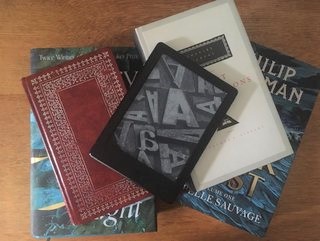 friend needed to self-isolate for 14 days and fared remarkably well: she had, she explained, more time to read and, for her, that was a luxury rather than a restriction. Her experience was, of course, ‘more complicated than that’ but I can’t help feeling that it’s been beneficial to be a reader during the last few months.
As a teenager, I’d been given to feel that English Literature was a less worthy academic choice than Science or Engineering. My degree had been an indulgence, supporting interests which are merely hobbies – reading fiction and theatre-going. The course could be defended only as a conduit for developing what we now call ‘transferable skills’ – skills in analysis, shaping an argument, facility with language: the core subject lacked substance. I was apologetic – and a little defiant – at the time and remained so for decades.
Over the last few years, however, that feeling has shifted and during the last few months I’ve been forcibly struck by a conviction that Literature and Drama have exceptional and particular value. It’s so enjoyable to read a good book, or watch a fine performance, that we forget just how remarkable an event it is.
When we are denying ourselves social contact and physical movement, literature isn’t just a distraction, it’s deeply therapeutic. In my mind I have been able to travel through time and space, liberated from this location, from this household, from this pandemic, even from myself. I’ve been drawn to ‘big books’ – long stories which take time to unfold; often to books set in London; to books where the authors have a clear moral sense. Knowing the reasons for these choices doesn’t make them less effective. And audio books have been especially powerful, adding a depth of performance which compensates me for the lack of live theatre. I’ve been in Tudor courts, and Chancery, Lancashire mills and an Oxford from a parallel world, through streets and slums, taverns and prisons. The Thames is a palimpsest of inter-crossing journeys: Cromwell in his barge, heading to Greenwich, passes Pip rowing down to Tilbury, and Malcom and Alice with baby Lyra in La Belle Sauvage arrive amidst the wild flood water, seeking Lord Asriel.
Books offer escape from lock down, but not escapism. It’s exploration. A book is a safe space, within which we can face our greatest fears; we can try out ways of enduring and surviving them, using another’s courage. Books provide a language – of comparisons and characters, images and emotions – and says it all better than we can express ourselves.
It’s essential at the moment to think altruistically. To evaluate the risk associated with our own actions, we need to project the possible effects, to imagine what impact our movements might have. Empathy is not just a kind or desirable feeling; this response is crucial to manage the spread of infection as a society. Literature and Drama help forge that ability to connect, in ways that are unlimited by geography or time or circumstance or social bubble. Even reading Harry Potter makes you better.
Last autumn I went to a talk at St Martin’s in the Fields on the Quality of Mercy in Drama. Juliet Stevenson described drama as ‘an act of revelation and compassion’ which enables us and forces us to hear the reality of someone else’s point off view. These are remarkable assertions. It makes people, she suggested, ‘unbearably recognisable’. Literature and Drama offer us thought experiments and enable us to explore how things might look, and feel, and be experienced in the guise of someone else. Introspection through another’s eyes. This extends our experience of being human and being alive. I don’t think the subject lacks substance.
 lesleyjonesberry
I loved the ‘unbearably recognisable’ phrase and couldn’t agree more with the argument(though I’m the one who spent 14 days reading). And when I think what I most want from a ‘holiday’ in these unusual times, it is the opportunity to read without interruption.
I think ‘unbearably recognisable’ was Juliet Stevenson’s phrase. It is wonderful and piercing.