Carpe Diem

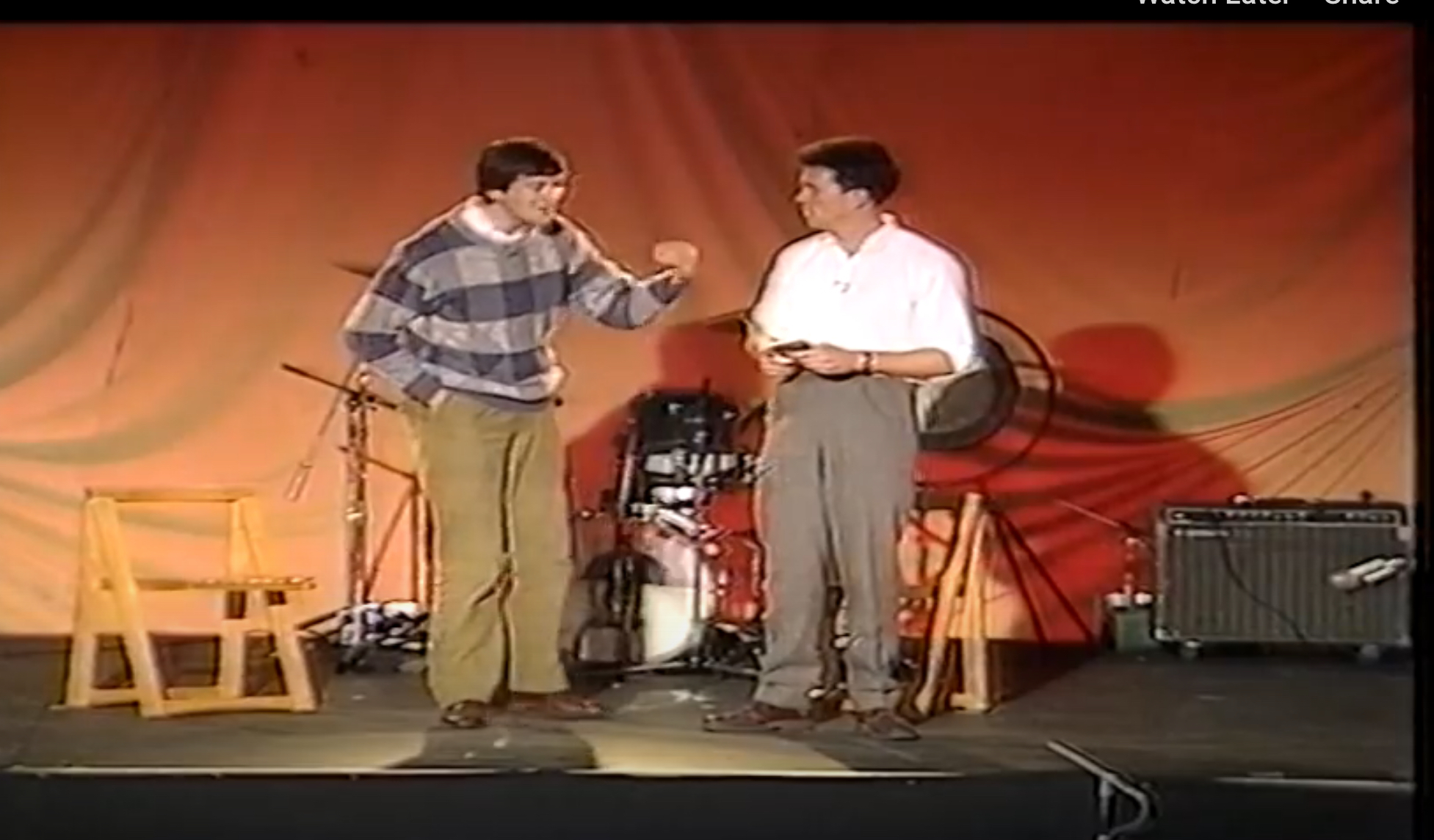
There is an old Fry and Laurie sketch, Shakespear (sic) Masterclass in which the pedagogic lecturer, Fry, employs fresh-faced actor, Hugh, to work on a passage from Troilus and Cressida:

Time hath, my lord, a wallet at his back,
Wherein he puts alms for oblivion,
A great-sized monster of ingratitudes:
Those scraps are good deeds past; which are devour’d
As fast as they are made, forgot as soon
As done

Act III Sc iii (or “T&C three three, that’s on page thirty-nine in your New Penguins if you’d like to follow in the tent” as Stephen Fry puts it)

They never progress beyond the first word which is, as they uncover and dissect, spelt in the ordinary way but with a capital letter (“very much upper case”) thus giving us “time in a conventional sense but also an abstract sense”.   The focus intensifies and Hugh is directed to convey all of this in his utterance of the single word:  Time (about 3 mins 30 seconds in to the sketch).    Fry is not impressed by this delivery

What went wrong there, Hugh?

Continue reading
Posted in Books, Health, Moving on | Tagged , , | 1 Comment

Indigestion

When we are really listened to, we feel better.  We share our problems with a good friend and no decision is made, no action taken, yet our sense of emotional heaviness is so often lightened. 

Continue reading
Posted in Health, Moving on, Uncategorized | 1 Comment

I see dead people

The ghosts have returned to my dreams.  I am travelling in a car and the driver is revealed to be my dad, so I feel safe although I don’t know where I am going or why;  another time, midway through a complicated series of events, I find the dog in a dusty basement, old and frail but – as ever with dogs – no knowledge of this in herself, so she is happy to see me and keen to chase a ball, and I scoop up her warm, living, silky dog-smell body and take her with me once more.  My waking self rejoices in these reunions.  They generate comfortable feelings of gratitude, not only because of the loved ones they recall but, more importantly, they return my past to me.

Continue reading
Posted in Uncategorized | Leave a comment

Keeping my head above water

Metaphors are ingrained in our language and we cannot communicate fully without them.  The word ‘ingrained’ is itself metaphorical.   The image is of a piece of wood, and the grain which is part of its very fabric, the comforting associations of something which is natural and organic.  I did not write that we are programmed to use metaphor, because that leads our minds towards computing and the mechanistic.  I prefer to conjure, instead, a momentary shimmer of associations of wood grain; reaching out to touch the rough, warm texture, or feel the smooth sandpapered, almost soft-to-the-touch surface with fingertips, with the smell of woodshavings and, perhaps, the soothing brushing of oil into the grain to bring out the inherent beauty.

Without metaphors our language would be a shell (metaphor):  it would be dry (metaphor); it would be barren (metaphor) and nothing would come of it.  We clothe (metaphor) our thoughts in words to create a shape (metaphor) we can use.  We walk around the contours of our mind (metaphor), drawing near to a half-glimpsed (metaphor) thought and pulling back from the half-formed.  We poke and prod at inchoate feelings to mould, sculpt, forge.  To work out how to handle them.  This is how we make sense. 

Continue reading
Posted in Health, Moving on | Leave a comment

Keeping time

I left St Paul’s Cathedral at about ten minutes to 8 after a service of Choral Evensong, followed by a mindfulness session and the opportunity to walk the labyrinth installed under the dome:  the Chartres design printed on heavy canvas and large enough for perhaps a dozen people at a time to walk on.  Each of us journeyed slowly to the centre, rapt in our own impressions and feelings.   The dome receded above us towards the heavens; Christ gazed at us, triumphant and golden, above the high altar to the East; the saints and prophets surrounded us with their exhortations to faith.  I hadn’t spoken to anyone for over two hours. There were many people there, sharing the experience, and occasionally we’d had to make necessary social acknowledgements: on arrival and leaving, and negotiating a passing point on the labyrinth route.  These murmurings weren’t really words or speech and the blanket of silence had absorbed them easily, without disturbing the peace  Leaving the building and walking into the gentle summer evening brought a contrast of light and noise – even on this quiet city evening – so, to acclimatise myself back to the outdoor world, I decided to walk a little, along to the next station before I went down to the purgatorial Central Line.

Continue reading
Posted in Moving on | Tagged , | Leave a comment

Because Twitter is too brief

David Bradley tweeted this morning, a reply to someone called Lewis Capaldi about a pop video.  This led me to watch the video – and cry – and feel myself a little connected with the modern world.  I don’t often watch pop videos;  I hadn’t even heard of Lewis Capaldi. 

David Bradley however:  he has been a significant part of my world for many years.  There is a word ‘idiolect’ which means the speech habits peculiar to a particular person.  I am going to coin the word ‘idiomundus’:  my own, peculiar, particular world.  I quite like that: it certainly seems to describe this website.

Continue reading
Posted in Theatre | Tagged , , , , , , | Leave a comment

Life is of a mingled yarn

Alls Well that Ends Well, Act IV Scene iii

My best friend is working as a test knitter. This is when experienced craftspeople work through a new pattern to make sure it is accurate and comprehensible, and that the designer’s instructions translate – in the full range of sizes – into the desired garment. She has had to restart the project several times. I’m a competent knitter, albeit not as skilled or informed as she is, and recognise the experience of spotting a mistake, needing to go back and fix it, usually by unravelling and simply doing it again. Also, when working with a new pattern, there’s a process of ‘getting’ it only by doing it. The individual stitch instructions start to cohere with the bigger purpose and sometimes it feels better simply to start all over again, now that knowledge has been absorbed. ‘No, it’s alright, I get it now, I know what I am doing’ says my mum in my memory, who worked in a wool shop in her young adulthood, either side of her war service, and again in later life before retirement.

Continue reading
Posted in Health, Moving on | Tagged , , , , | Leave a comment

Work in Progress

Sometimes it seems I am just beginning to learn how to live:  that, until now, I have muddled through by accident. 

As a child I recall grown ups saying “if only I knew then what I know now…”, which I discounted as one of those adult expressions which felt patronising (see also “you can’t put an old head on young shoulders” and of course schooldays / college / childhood being “the best days of your life”).  I felt such sayings bore a whiff of envy about them.  They discounted just how bewildering, powerless and painful childhood, or schooldays, or college can be; they presumed an inability to appreciate the unmerited, glorious gift of youth; and they somehow took away any credit we might have deserved for all the effort we were putting in.   They appeared to come from ‘Gluckschmertz’ – being displeased by an event presumed to be desirable for someone else. 

Continue reading
Posted in Books, Health, Moving on | Tagged , , , , , , | 1 Comment

Palimpsests

At my mum’s funeral, her best friend Joyce looked at my daughter and thought ‘that’s her, that’s Pat’. My daughter, then 18, was about the age mum had been when this friendship had kindled, and family likeness did the rest. I think the moment was both pain and pleasure for Joyce, there to say farewell to her friend of 70 years, co-creator of vivid war-time memories of two young WAAFs, who stayed close in heart thereafter.

One of the deep pleasures of old friendships is that we still see past selves. Especially how the person was when we first met. My best friend is always the slim-waisted, chic blonde student crossing the courtyard with purposeful vitality, even as the present presents otherwise.  So also with siblings:  my grey-haired, bearded brother in my mind’s eye is yet a small boy offering me his birthday money so I could buy a stuffed toy dog (the lack of which threatened to be the biggest tragedy of my seven year old life). The colleagues I work with, they only see my grey hair, they only know me with grown-up children.  They cannot know more than that. Perhaps that is why, as we grow older, we reminisce more: not simply for the pleasure of sharing memories, but to assert that we are more than we appear to be.

Continue reading
Posted in Moving on | 2 Comments

Solitude

Before I start, I must distinguish between solitude and loneliness. We never choose loneliness, which is painful and – what is the word? – ‘unhealthy’, meaning health as in wholeness; ‘unnatural’ in the sense that we are inherently, innately social creatures. I will let Shakespeare provide the phrase – loneliness is ‘out of joint’. Loneliness steals upon one, dementor-like, subduing and muzzling the soul, severing the sense of connection.

Solitude, however, does not feel lost or abandoned. It is a freedom of the most self-centred kind. It can be the most welcome, healing indulgence.

Continue reading
Posted in Books, Health, Moving on | Tagged , , , | Leave a comment