
I am in the middle of a Short Story Writing course and our topic this week is journeys. I’m finding it impossible to write a story. Journeys are so deeply symbolic, so essentially, entrenchedly metaphorical, any creative capacity I have freezes in response. It doesn’t help that I’ve just read Erling Kagge’s book ‘Walking’, which contains gems like this:
In Sanskrit, the past tense is designated as the word gata, ‘that which we have walked’ while the future is anāgata ‘that which we have not yet walked’.
This stops me in my tracks – ha! I reach instinctively into the same imagery, the same vocabulary of spatial language to express an internal experience. I appreciate the paradox at least.
Had the topic been ‘travel’, this would not have been a problem. Travel feels like it belongs to a material world, of airports and train stations, itineraries and suitcases, about which one could churn out words without the ponderous weight of symbolism. Although (forgive the small digression), etymologically, the word itself assumes the events will be painful: it’s related to the word ‘travail’, as if the medieval French already anticipated most of my airport experience.
Travel is, perhaps, merely about movement (or frustration thereof, or is that just me back in the airport?). ‘Journey’ has a sense of duration. It’s linked to the idea of a day – the French word ‘jour’ which comes from the Latin ‘diem’. A journey is, at root, how long we can travel in a day. Just as a journeyman is paid for how much he can work in a day. A journey is also how far we must travel in a day: right from the start the word’s meaning has been bound with the ingrained metaphor of the path of an individual’s life. Duration and distance being interwoven in a way which is intrinsically our human experience. Hence Eugene O’Neill really acing it in the title department with ‘Long Day’s Journey into Night’
Journeys are best done at a pace and in a way which keeps us connected to our human scale, to the land we travel through and the people we encounter. This is how they become enriched, enriching. I do not know why, but I find train journeys do this in a way which car travel does not. Similarly, we can journey by ferry but, for me, one only travels by ‘plane.
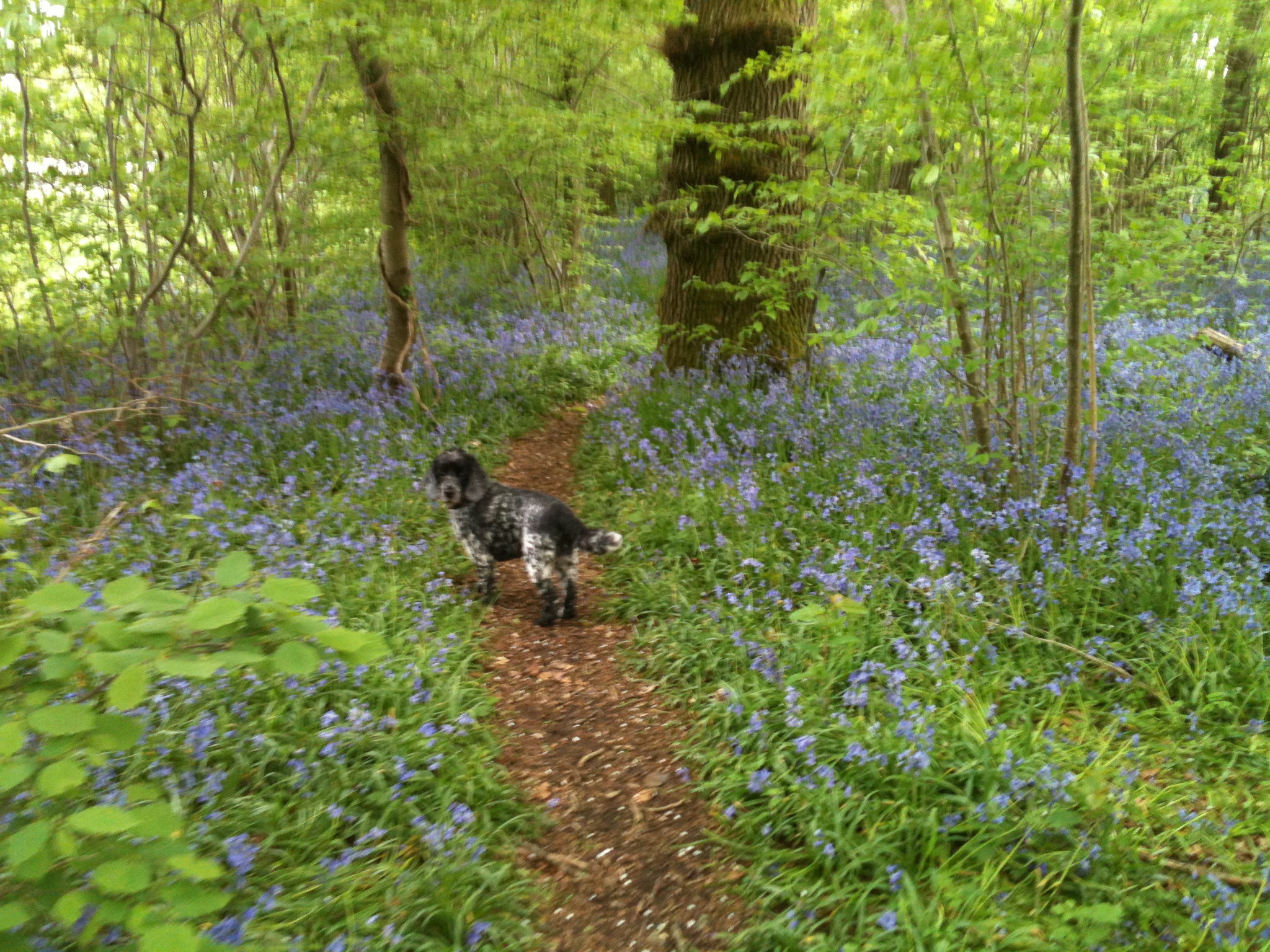
The most meaningful journeys are those which reduce the scale further, those done on foot above all. Walking reconnects us with ourselves, our stature. I use my own energy, I recognise my limits, I appreciate my strength. Once I have adjusted to my own pace and become comfortable with myself, walking enables me to regain my ability to notice and connect with my surroundings. So much has been written about this already.
Again, Kagge has a great moment to share: there is an Inuit tradition that requires one, if overwhelmed with anger and unable to control one’s feelings, it requires one to walk out, away, in a straight line across the snow. When the anger has left, you mark the point at which the anger is released with a stick in the snow. And turn back. ‘In this way’ writes Kagge, ‘the length, or the strength, of one’s anger is measured’. We can give (in the Inuit tradition we are forced to give) ourselves an opportunity for the self to settle: the inchoate feelings, which have disturbed our self-awareness, our coherence and, especially, destroy our rational capacity, are ‘walked out’. We can use our physical self to minister to the emotional, the crazy chemical imbalance to resolve. We can trust our body to heal itself, if we just walk. In a movement we learn naturally as infants, before we can speak, time and motion and space are indivisibly interwoven.
The problem, the cause of the anger, remains still, but we can move ourselves away from it. I can give myself space, and gain control over the most important element, which is myself and my response. This is so often the thing that cripples. My reaction, the way I perceive something, not the thing itself.
When I can bear my emotions, am no longer overwhelmed by them, recover self-control and am reintergrated, then I have a choice. In theory, I could keep walking away. But I usually feel that doing so would be worse, would leave me adrift and untethered. I suspect this is a genuine choice and that some people choose to do exactly that, cut their losses, move on without engagement. I’ve always been a fan of circular walks, recursion, continuity, circularity, these things have always resonated. So I like the Inuit tradition of dissipating the anger – scattering it widely across the landscape, fragmented into such tiny particles it becomes weightless, blown hither and thither by the cold wind. Then I turn back and face a return journey.
 lesleyjonesberry
There are so many threads woven into your distinction between ‘travel’ and ‘journey’ that I want to trace further. I will try to limit myself.
I feel that a journey intrinsically is about the doing, not the getting there. That every step along the way is part of the journey. We have Eliot to thank for popularizing, if not originating, the phrase “The journey not the arrival matters,” or perhaps Virginia Woolf who used it for her autobiography.
Travel by contrast is all about the arrival. Flying – a word that should invoke soaring, freedom, joy, lightness, wonder at the brazen defiance of nature that aircraft once represented – in particular is an astonishingly miserable experience in the modern world at every step. If flying were “about the journey”, airports would be desert islands. Sleeping through a flight is a blessing. It is actually quite remarkable how quickly we all have accepted the discomfort and disempowerment inherent in modern air travel. At no time in the past fifty years, I aver, has anybody ever said “I wish I could have that flight over again”.
Note also how we routinely talk about “a train journey” versus “air travel”. A journey is singular; travel is a mass noun.
So it is that one goes on a walk or a bike ride or rows a boat up a river for the pleasure of the thing itself, even if the destination is one’s starting point. The word “bummel”, borrowed from the German by Jerome K. Jerome’s ‘Three Men on the Bummel’, the sequel to ‘Three Men in a Boat’, sadly does not seem to have caught on in English and is rarely seen in the wild. Jerome keeps his reader in suspense to the very end of his book to explain this word not found in the dictionaries of his day:
“”A ‘Bummel’,” I explained, “I should describe as a journey, long or short, without an end; the only thing regulating it being the necessity of getting back within a given time to the point from which one started. Sometimes it is through busy streets, and sometimes through the fields and lanes; sometimes we can be spared for a few hours, and sometimes for a few days. But long or short, but here or there, our thoughts are ever on the running of the sand. We nod and smile to many as we pass; with some we stop and talk awhile; and with a few we walk a little way. We have been much interested, and often a little tired. But on the whole we have had a pleasant time, and are sorry when it’s over.””
A journey is singular; travel is a mass noun
Wish I had said that.