
Alls Well that Ends Well, Act IV Scene iii
My best friend is working as a test knitter. This is when experienced craftspeople work through a new pattern to make sure it is accurate and comprehensible, and that the designer’s instructions translate – in the full range of sizes – into the desired garment. She has had to restart the project several times. I’m a competent knitter, albeit not as skilled or informed as she is, and recognise the experience of spotting a mistake, needing to go back and fix it, usually by unravelling and simply doing it again. Also, when working with a new pattern, there’s a process of ‘getting’ it only by doing it. The individual stitch instructions start to cohere with the bigger purpose and sometimes it feels better simply to start all over again, now that knowledge has been absorbed. ‘No, it’s alright, I get it now, I know what I am doing’ says my mum in my memory, who worked in a wool shop in her young adulthood, either side of her war service, and again in later life before retirement.
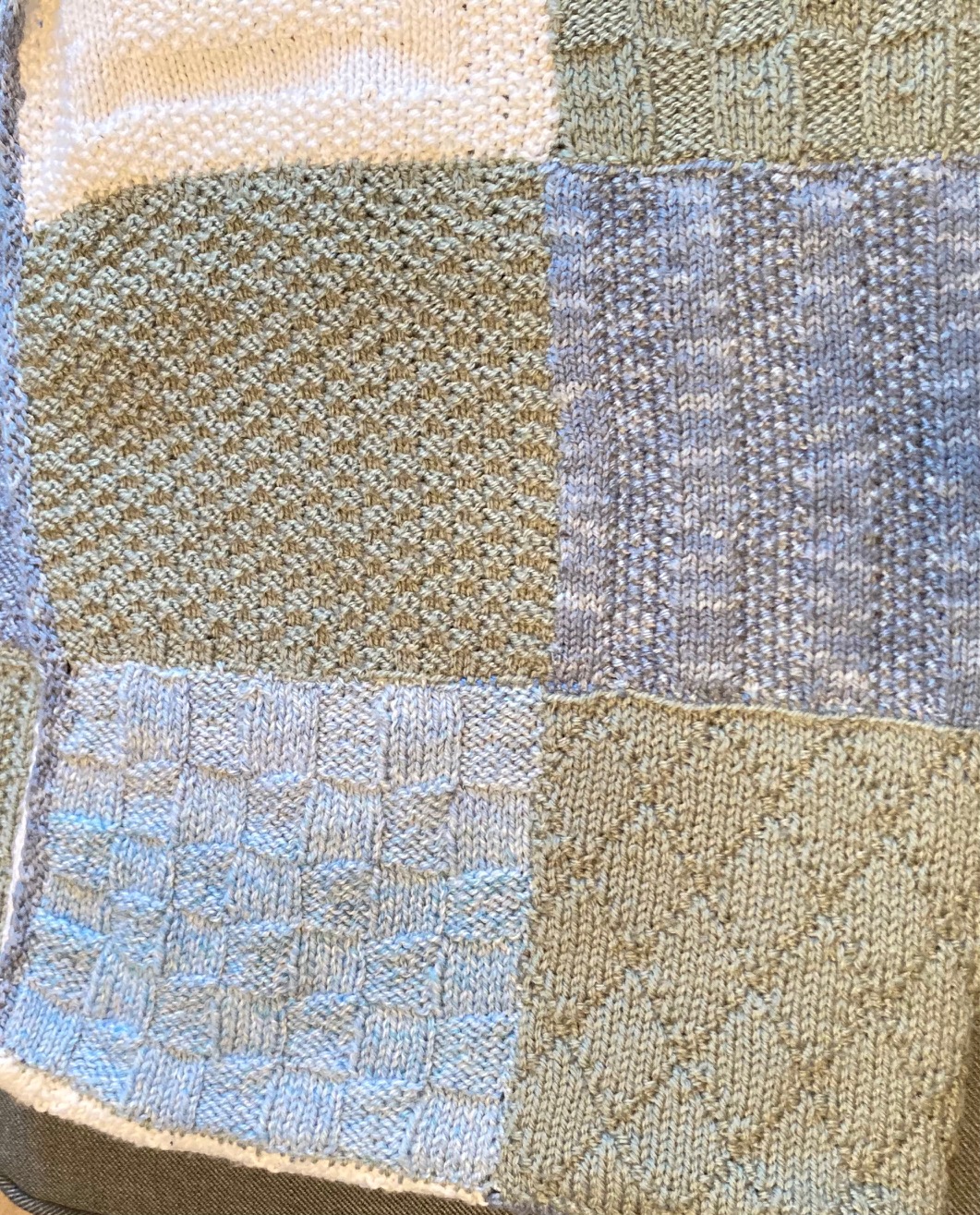
In my knitting experience, it is impossible to make a fault-free garment. No matter how hard one tries, there will be irregularities and errors. It’s part of what makes hand-knitted garments unique and, somehow, much more rewarding to wear. As a knitter, you have to decide your own level of fault tolerance, within real constraints: some mistakes will cause the garment to be ill-shaped or even – taken to an extreme – fall apart. Others may be tiny pattern blemishes that no-one else may notice, but you will need to live with. Depending upon the nature of the fault, and when it occurred and how far back in the piece, there is a decision to be made about what to do. It’s easy to think that the best decision is, always, to unravel and do the whole thing again. But it’s hard to lose all the good work which has been done since, and reworking cannot guarantee that no further mistakes will be made. It’s wrong to rush knitting, but time is limited, and although yarn can be undone and reused, it cannot be done so endlessly – the strands retain kinks and lose fibres. Making and remaking can’t be done ad infinitum, not if progress is to be made and something completed.
I have a huge tendency to hear everything as metaphor and so with the image of knitting: the incremental progress, the mistake which we were unaware of making at the time, the decision as to whether it needs fixing or can be tolerated. It’s so obvious, it’s impossible not to feel like a parody Thought for the Day; the phrase ‘the sardine tin of life’ comes into my mind and I have just rejoiced to realise that half-remembered sketch is an early Alan Bennett: ‘Take a pew’ from Beyond the Fringe (the whole thing is painfully exquisite, skip to about 5minutes in if you want the particular sardine tin moment). I won’t, therefore, over-explicate the symbolism of knitting.
I’m midway through reading How to be a Craftivist by Sarah Corbett which articulates the personal and social benefits of doing crafts: making things with our hands; engaging in actions where speed is a necessary consideration (you have to persist, and while we become quicker as we become more proficient, you cannot rush making things by hand); becoming more skilful, which word I take to mean a combination of understanding and practical ability, a blending of mind and body (especially mind and hands). Peter Korn, I think, makes the same point extremely persuasively in Why we make things and why it matters although it’s many years since I have read the book and cannot recall clearly. It is, however, on my shelf, a book I want to (re-)read in the future and I suspect I’ll be returning to it before long. Crafting is always, characteristically and perhaps essentially, multi-layered and complex: grounding, soothing, connecting and unpretentious.
Although crafting often focuses on using the hands, it’s a multi-sensory experience which involves every part of us – mind and body and emotions. With knitting, the feel of the yarn and the colour of it are an essential part of the garment and of the experience of making it (and why I have finally learned it’s worth paying for the best one can possibly afford. I will spend hours working on the project: beautiful yarn which is a pleasure to touch and look at is, at almost any price, cheap therapy). The result, as Sarah Corbett identifies so well, is an object which preserves the memory of the making. Everything we invest into it is, somehow, there to be returned to us repeatedly or, if it is a gift, we hope the recipient can sense some of the thought, care and goodwill which were committed to the piece.
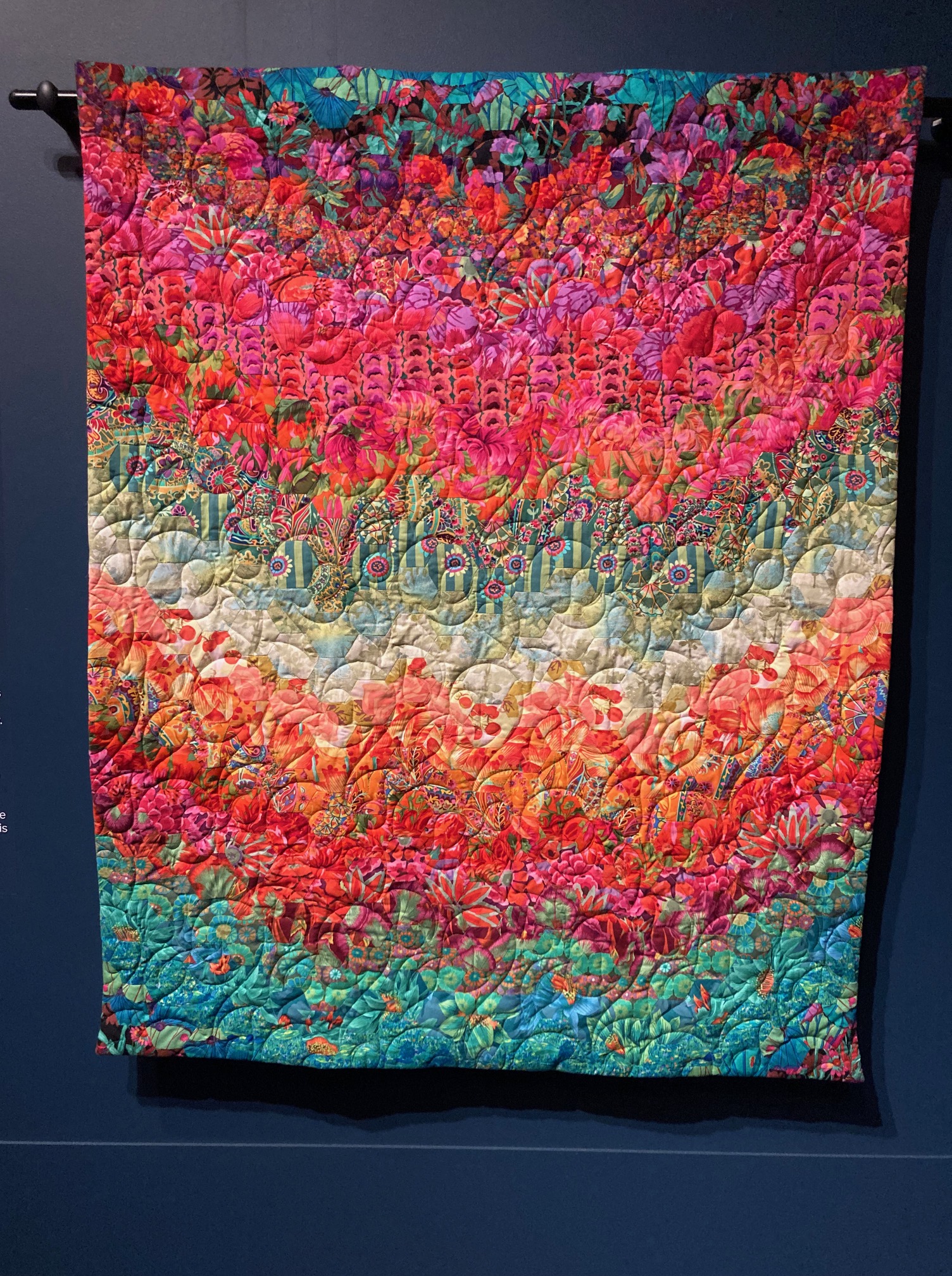
Yesterday I went to a Kaffe Fassett exhibition, The Power of Pattern, at the Design and Textile Museum. It was a glorious cavalcade of colour and joy. As always when I go to a museum or gallery, I know so little beforehand that I leave buoyed up by the amount I have learned by the visit: what struck me most was the inescapably collaborative nature of craft. I had been aware of Fassett most of all as a designer of patchwork quilts, which of course he is, and the exhibition was largely of quilts. Some were Fassett designs which he, or others – part of his team, as it were – had made. Some were Fassett designs which others had made and I had not really thought through how it is impossible to make a patchwork quilt without it becoming one’s own. The selection of fabric, and then the cutting of the fabric for each piece, and the placing of each piece within the larger work, all these steps are decisions and appropriation, or individual realisation and interpretation of the design. As instructions become practice, each step and each stitch is a translation and collaboration. And some of the pieces were using Fassett fabric, colours and prints, in completely different styles, inspired to move in utterly new directions.

With a painting, I often step back to get the overall impact, and the main way I can appreciate it more is by looking for longer, giving it more time. Craft draws one in more; I moved closer to examine the detail, to look for stitches and seams, see where the quilting blended the colours and added another dynamic layer of movement and shape. Stepping back to drink in the overall beauty, my appreciation was more richly informed by looking again for the spots I had focused on, connecting that bit of knowledge – that small bit of ‘deep knowledge’ – with the whole.

The space was filled with a quiet buzzing energy; none of the reverent silence that sometimes accompanies an art gallery, this was a space for questioning (How did they do that? How is that made? How might I learn and do this?). Some pieces took years to make and while the exhibitors’ stories were hugely varied, one biographical thread did seem to be repeated, which was simply that some of these exhibitors had, at some time in their lives, tried patchwork, been hooked, and it all grew from there. It felt to me that roles of visionary, maker, observer were porous, non-exclusive distinctions and that crafting is an accessible, egalitarian, connected, joy-making space.
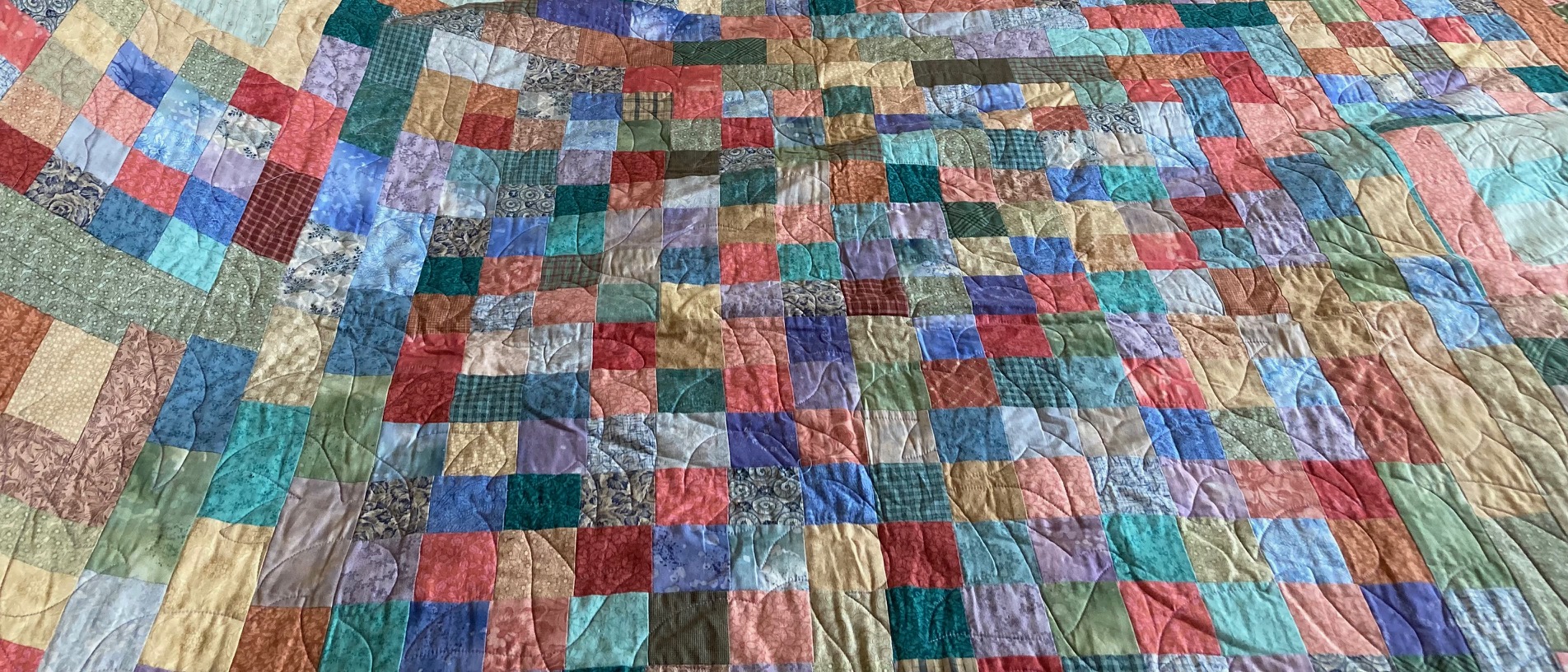
For the last year or so I have slept under a Kaffe Fassett quilt, made many years ago by the same best friend who is now patiently knitting. I am, as I write, wearing a huge hand-made cardigan which I made myself: every time I put it on, it warms with a caress, and my past self embraces the present me. I have just a small project in hand at the moment, a small piece of cross stitch, a gift for a colleague, which I must turn to and complete. Put in the time, dwell in the making, and in this instance, pass it on.
 lesleyjonesberry