
Sometimes it seems I am just beginning to learn how to live: that, until now, I have muddled through by accident.
As a child I recall grown ups saying “if only I knew then what I know now…”, which I discounted as one of those adult expressions which felt patronising (see also “you can’t put an old head on young shoulders” and of course schooldays / college / childhood being “the best days of your life”). I felt such sayings bore a whiff of envy about them. They discounted just how bewildering, powerless and painful childhood, or schooldays, or college can be; they presumed an inability to appreciate the unmerited, glorious gift of youth; and they somehow took away any credit we might have deserved for all the effort we were putting in. They appeared to come from ‘Gluckschmertz’ – being displeased by an event presumed to be desirable for someone else.
Now, with a sigh, I identify the emotion I scented was probably not envy, or Gluckschmertz, but regret.
We spend our lives trying to recover from our childhoods. It now seems utterly bizarre that I didn’t reflect more deeply on my past throughout my life. But I suppose accepting our formative years and all their idiosyncrasies is the first necessary step to moving forward – and stopping to reflect on our past would block the momentum as the energy of youth urges us into the future. And I have friends, and dearer than friends, who have only recently really engaged with the impact their early years had upon their adult lives. Perhaps we have been abnormally slow, perhaps it is co-incidence. And perhaps it is common and exactly what those grown ups were giving expression to, when I was a child.
For now it feels, already, too late. It’s not too late for me to reflect on this for myself, but I am already (I almost wrote ‘have been’ because my children are well past their childhoods) a parent. So Philip Larkin is right and I didn’t mean to but I did. Philippa Perry’s book ‘The Book You Wish Your Parents Had Read: (And Your Children Will Be Glad That You Did’) is 30 years too late for me, but thanks anyway, Philippa (How to Stay Sane, on the other hand, is a survival manual for any age).
So I muddle on, and suspect this astonishment will continue – how could I not have thought more? listened to my feelings? considered what I actually wanted? Instead I see a pattern of reaction; an ingrained response and capacity for acceptance, and making the best of the space left to me. Only now have I even asked myself why ‘making the best of things’ has been the ground of my being; or why being unnoticed feels like a blessing.
TS Eliot expresses this recursion, that we return to something and only now do we ‘know (it) for the first time’. It would be easy to be consumed by regret (the root is linked to grief, e.g the old English word graeten): I have a past which now seems to show nothing but lost opportunity, leaving me standing with a small, precious sense of newly gained understanding cupped in my hands. There is, relatively speaking, so little future to carry it forward into.
But as TS Eliot wrote and, last Monday at St Martin in the Fields Rowan Williams said, the one place where past and future meet is here, and now. One place where, undisputedly, I am present; the one place where I can have any effect. In TS Eliot’s words, this is the moment which can be redeemed and, in Rowan Williams’, where it is possible to repent – by which he means learn from the past, facing it with honesty and applying the self-knowledge we gain to the future. The word I am reaching for, perhaps, is neither redeemed nor repent, but reconciled. Which is Latin: to bring back together again. This past year has in many ways felt fragmented and my longer past remains unstable but, as I have written, it feels as if my self has re-cohered in time. The online etymological dictionary says the ‘re’ in reconcile means ‘back (also expressing intensive force’) which I find peculiar but heartening. A bit of intensive force feels like a very positive thing.
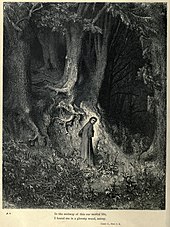
At the start I said I am muddling through by accident. Accident isn’t necessarily a bad event or a mistake: it is simply what is happening now. From the Latin, accidere: as it happens, as it falls out. The PIE root for accident is ‘kad’, to fall, and accident is therefore linked to words such as chance, and cadence (and, perhaps, Buzz Lightyear ‘falling with style’). Yes, I am muddling through by accident. As I always have been. Always will be. The only other option is for it all to be over, done and ended: cadaver is derived from the same root. Never unafraid to grasp at and abuse great literature (reducing it, I fear, to a ‘gobbet’ and making Hector wince), I have to reach for Dante:
Nel mezzo del cammin di nostra vita
mi ritrovai per una selva oscura,
ché la diritta via era smarrita
I have always focused on the second half of the verse: losing the right way, the confusion. But it is also possible to focus on mi ritrovai. I found myself again. And these are opening lines, at the start of a new journey. It’s always possible to start again. Every day.
 lesleyjonesberry
Pingback: Vectors | lesleyjonesberry