
Before I start, I must distinguish between solitude and loneliness. We never choose loneliness, which is painful and – what is the word? – ‘unhealthy’, meaning health as in wholeness; ‘unnatural’ in the sense that we are inherently, innately social creatures. I will let Shakespeare provide the phrase – loneliness is ‘out of joint’. Loneliness steals upon one, dementor-like, subduing and muzzling the soul, severing the sense of connection.
Solitude, however, does not feel lost or abandoned. It is a freedom of the most self-centred kind. It can be the most welcome, healing indulgence.
I’ve recently resumed an old friendship, one which was ‘in person’ over 30 years ago, lay defunct for decades and now, via the wonders of the internet and by welcome accident, revivified. One of its pleasures lies in its asynchronicity and distance: my friend lives in America; we have no plans ever to meet again – indeed are unlikely to; we have no direct impact on each other’s life and this creates a peculiar freedom which suits us equally. It provides an almost confessional space where we can voice uncertainties, irritations and even what feel like our most selfish and ungrateful thoughts. Of which one is the love of solitude.
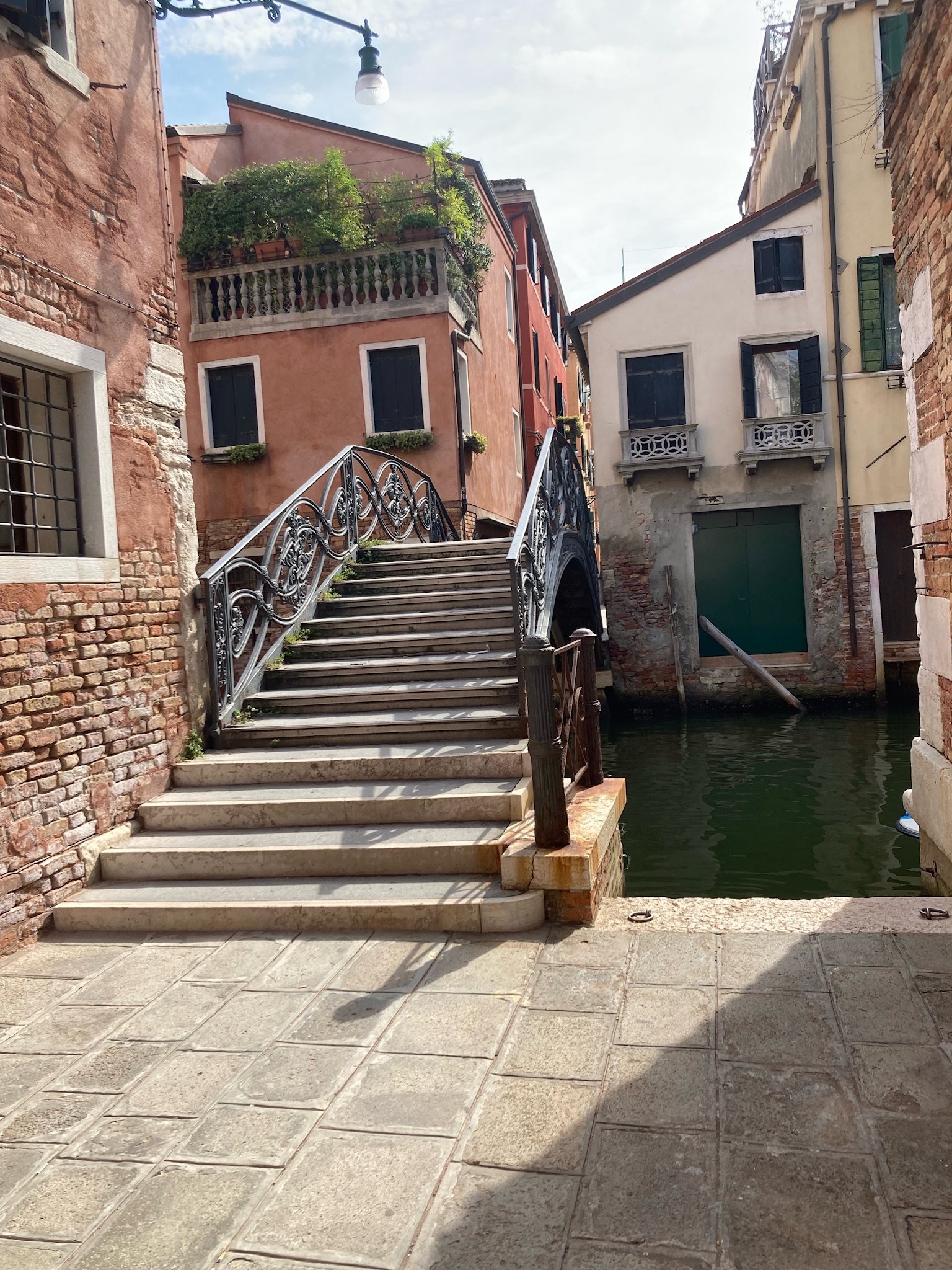
Alone, there is no-one whose well-being I need to consider, apart from my own. I go at my own pace, and my own pace, for these few days, is among the calle and campi of Venice. I set my own destination, am diverted on the way exactly as much as I wish, following a sign, drawn by a glimpse of water or colour, merely on a whim, and I cause trouble to no-one.

Things are affordable in solo, such as an extortionately priced, deliciously authentic Bellini in Harry’s Bar, as they would not be, somehow, multiplied by two or more. Especially if this were with a half-hearted, bemused or begrudging companion. Which is not to say any companion would be so but, in truth, the moments when our degree of pleasure and interest in anything is exactly matched with the others around us is – obviously, now I think about it, and inevitably – very rare. Solitude removes all risks. We need have concern for no-one else.
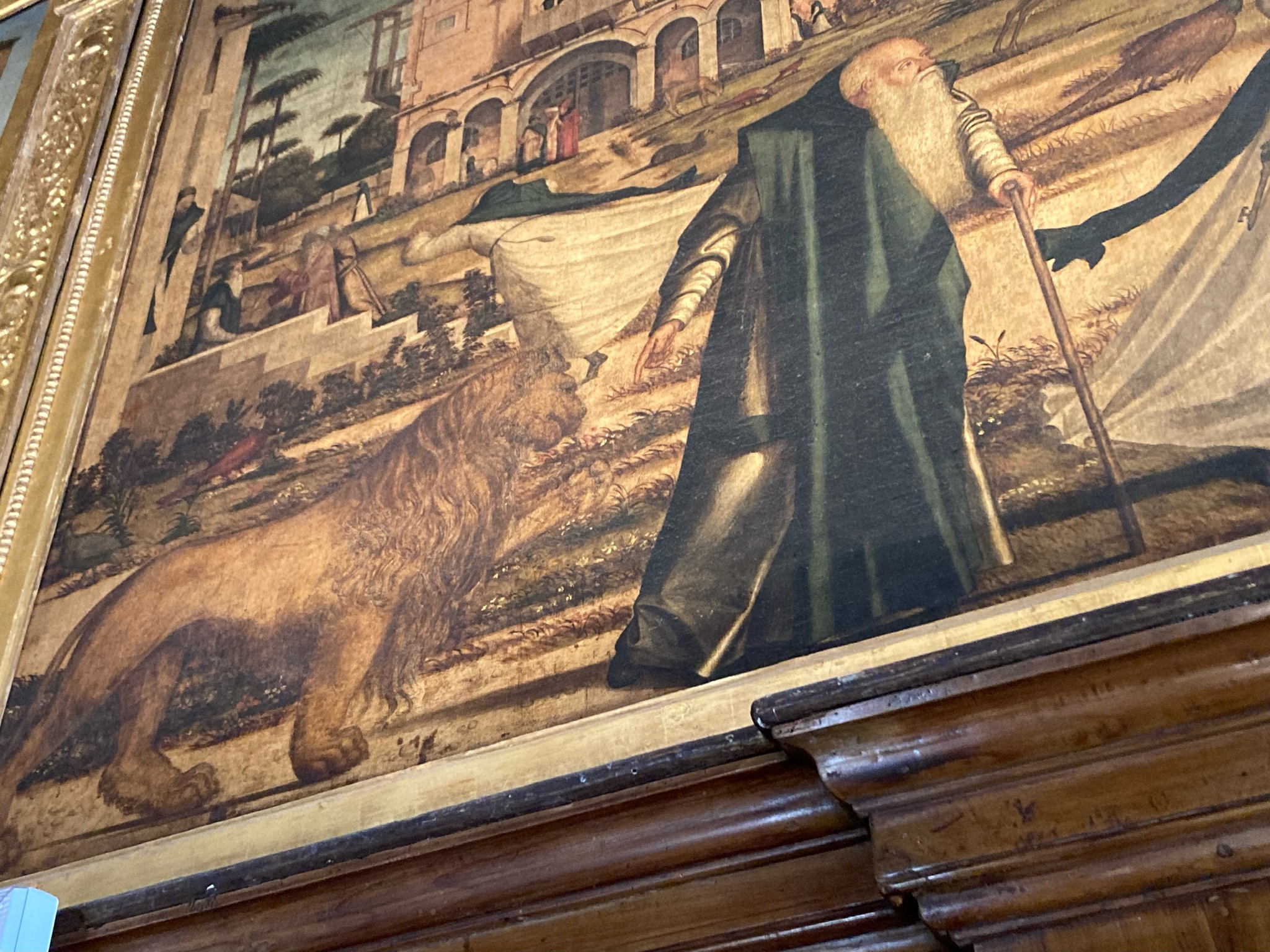
I have sat this morning amongst Carpaccio paintings that, thanks to Jan Morris, came upon my senses with exquisite power and whom I met as friends. I was distracted into an exhibition, an immersive water-themed art installation which included talking with, conjuring virtual-reality Jellyfish and meditatively allowing waves to wash, visually and aurally, mesmerically over me. No-one else cared. No-one else was bothered by this.
Of course no-one else shared these entirely lovely events, which is why solitude is essentially selfish. Solitude alleviates the sense of responsibility – and I have become aware that my sense of responsibility is often unhelpfully acute. No-one was bored while I indulged myself, which is a relief. Also, experiencing such pleasure sloughs off a little of the covering of the mundane. Like washing a grubby child after a long day, removing the layer of dirt and revealing skin not only clean but freshly tender. It’s a little, not ‘unnerving’ but precisely ‘nerving’. Re-sensitising. It makes us, for a little while, more vulnerable – which means open to being wounded. Being with, being aware of that in another also, to me, presents as a responsibility (and privilege). In solitude, I can just tend to myself. Even writing that now creates a strangely powerful easing of tension inside.
This solitude has, like Malvolio’s greatness, been thrust upon me. But it has also created indulgence. The history of the word gives it ambiguous associations: yielding, pleasing, engaging oneself in something, and also the church associations of remission and freeing from punishment. In truth, there is no-one whose presence here with me today would have made this visit better. Does that make me a dreadful person? Or do some readers acknowledge that confession with a guilty thrill of recognition? Not always, but sometimes, alone is wonderful and, perhaps, needful.
Solitude also brings frequent small challenges and anxieties which, if negotiated – and these need be negotiated on no-one else’s terms but my own – therefore become ridiculous but genuine achievements. Finding the way to my accommodation, daring to enter a restaurant alone, buying stamps with only about 10 words of Italian and a ready smile.
The micro-victories, the unexpected discoveries, the uninterruptedness and self absorption create an intensity, a heightened awareness of experience which makes it feel as if not a moment is wasted. It slows down time. It fulfils Faustus’ impassioned plea
O lente, lente currite, noctis equi
Marlowe, The Tragical History of Dr Faustus, Act v Sc ii
Alone, my hours lengthen, the minutes slow, even dawdle. The day is lived and good. All manner of things become well.
 lesleyjonesberry