
Good Morrow, friends. St Valentine’s is past
A Midsummer Night’s Dream, Act IV Scene i
What is love? This huge essential word. It motivates us so strongly, and at the same time it is ubiquitous and clichéd. Patently, it ranges from something quintessential within our psychological core, to the softest, most whimsical, peripheral frond and feather of feeling.
If you are a person of religious faith, then love can be defined within those terms and ascribed to one or more deities. If, like me, your faith has no divine spark, then love itself is both untethered and yet an anchor.
Most of us are born to love. At the moment, I am addicted to Call the Midwife. I have lost count of the number of births portrayed: almost always (unless tragic plotline intervenes), there is that moment, not momentary, a prolonged moment, a suspension and resolution: physical release and then the sound of a cry. This moment is the intersection of a trinity – of love, joy, life. We love, then, instinctively.
But also we love consciously. When we embark on a new relationship, we construct the framework within which we can experience and express love. And here, the ‘hearts and flowers’ of Valentine’s day have their place: romance and wooing, making special efforts in dress and behaviour, overwhelmed by passion and hormones, trying to be the best one can be to woo this fascinating other. But so do the more mundane elements have their role: spending time with, cooking for, helping, making cups of tea, solving problems, kindness. Habits and routines, laying down memories and sources of subsequent shared meaning and laughter. Recognising each others’ weaknesses, complementing them with our own strengths if we can; muddling through together; regretting the unkind word, but knowing that we can be more honest with this person than with anyone else. Doing things together and trusting while apart. We construct structures: practical ones like households; and emotional ones – in what we say, how we think, how we prioritise. The two, the emotional and the practical, intertwine. We adopt social structures: we identify as a couple, we nominate the other as our next of kin, we get married.
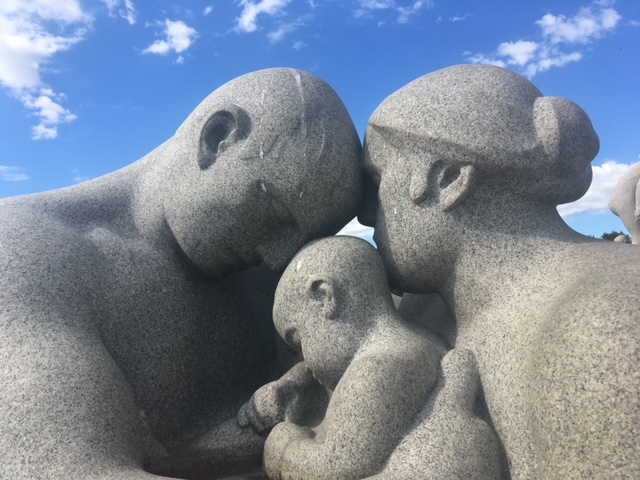
There is, I have recently learned, a thing called attachment theory. Our experiences as children set a pattern for the way we approach relationships later. So the underlying theme of this blog returns: it all goes back to my mum. From the wisdom of Wikipedia, I identify as securely attached. I may, I do have many other quirks, weaknesses and insecurities, but in this area I feel deeply centred. And so my view of love, of this constructed love, by which I mean marital love, is that I am deeply integrated within it. Both sheltered within it, and also part of the framework itself – interlocked, intertwined, subject and object, creator and beneficiary. Sometimes we feel the emotions strongly; at others the routine and the practical, even the social, carry us through and keep the protection in place for feeling to recover. We practice the habit of love. As parents, this creates the space for children to dwell. It is both artificial and organic, like Greek myths where maidens are changed into laurel trees. We metamorphose. We beome part of the very thing we have built. We are permanently changed by love.
 lesleyjonesberry