
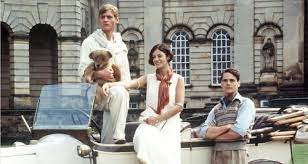
I am re-reading Brideshead Revisited by Evelyn Waugh. It’s a striking, indulgent, flawed novel, I think. Not entirely successful, but somehow it communicates a – to me, irresistible – sense of beauty, loss and yearning which repeatedly draws me back. Given my age, I cannot read the narrative without hearing Jeremy Irons’ melancholy tones, or see in my mind’s eye anyone but the young, impossibly golden Anthony Andrews as Sebastian. The luscious TV adaptation was on screen just as I was applying to Oxbridge, so the book evokes a complementary nostalgia in me for my own past: youth, hopes, idealism and magical moments when I was at College, timeless and elevated far from my upbringing. Et in Arcadia Ego.
The sentence, ‘It is time to speak of Julia’ (Brideshead Revisited Part II – Brideshead Deserted Chapter 2) has long stayed in my mind because it chimes with my enduring, college-born, obsession with names and the function of naming as an entry point to how we use language.
Charles names Julia and by so doing Waugh marks a shift in focus. The perspective pivots from being entirely centred on Charles and Sebastian, to Charles’ relationship with the wider Mottram family and particularly with Sebastian’s sister. It’s such a simple, limpid sentence and so beautifully effective. Each reading makes it more resonant, as the euphonimous word ‘Julia’ is more deeply enriched with associations and foreknowledge.
But names are, at root, simply nouns: labels for things, so that we don’t need to carry them with us all the time if we need to refer to them. If we share the same language with someone, we can say a word and the idea is communicated. Chair. Table. The more we speak, the more words we can share, the more we can communicate. And so we can speak of Julia. And of course language is not just nouns – we learn verbs and adjectives and prepositions: come, go; red, black; near, far; and abstract nouns to speak of concepts and emotions: joy, fear; truth, deceit; pain, hope, love.
Conversely, if we cannot name something, it is somehow very hard to do anything with it. There is, as it were, nothing to get hold of. We cannot speak of it effectively and, worse, we struggle even to hold the thing securely in our own mind. There’s a handy quote in Shakespeare of course: ‘as imagination bodies forth the forms of things unknown, the poet’s pen turns them to shapes and gives to airy nothing a local habitation and a name’ (A Midsummer Night’s Dream Act V Scene I). Just replace ‘poet’s pen’ with ‘language’. If you have known someone with dementia, you will recognise how frustrating it is as their language functions diminish and they lose the names of things. Frustrating for them; frustrating and heartbreaking to witness; losing the ability to communicate with someone we love.
Unnameable things are often uncontrollable and frightening. I am, at present, waiting for someone to find words, to give an account for himself, and until they do, until they can give these ‘forms of things’ ‘a local habitation and a name’, thoughts and fears and apprehensions swirl in my mind unrestrainably. Names provide a way of containing things. ‘He Who Must Not Be Named’ is a vast, nebulous, unstoppable force. Harry Potter’s insistence on calling him Voldemort is the first step in making him more defined, knowable and – as more characters take the same brave step – reducing him to someone who can be defeated. We are empowered if we know, if we can speak someone’s name.
Language is also characterised by fluidity and change and redefinition, but naming speaks to its simpler, more direct core. Knowing the name for something confers a feeling of control; grants the relief of being able to identify it and so, somehow in our minds, we are able to put it down, turn away from it, with a sense of ease that, when we return, it will still be there and look the same. Names, nouns help us to make sense.
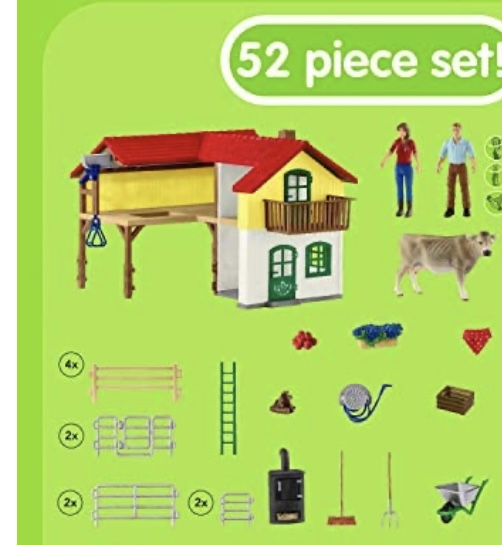
These names, these words should not imprison or compartmentalise. They describe: this means to set down in writing [Latin – de- down and scribere write], and also, from late 14th Century, to draw round the outline. In my mind’s eye these outlines are not boxes or even walls, but fences. Specifically I imagine the flimsy plastic fences from the toy farm set I had as a child. These are boundary markers merely, providing orderly spaces for the sheep, and horses, and chickens, each to have their own space and be with their own kind in a tidy, pastoral haven. Names, in this idealistic vision, neither imprison nor confine. They are a way to create order and even to protect. And our minds are not constrained by the containment that names provide. Our imagination remains free to peer through the rails, or vault over. Nurtured by this bucolic order, our imagination can even take flight, wheel above and soar into the heavens. Names keep things safe for us, and wait for our imagination’s return.
 lesleyjonesberry