
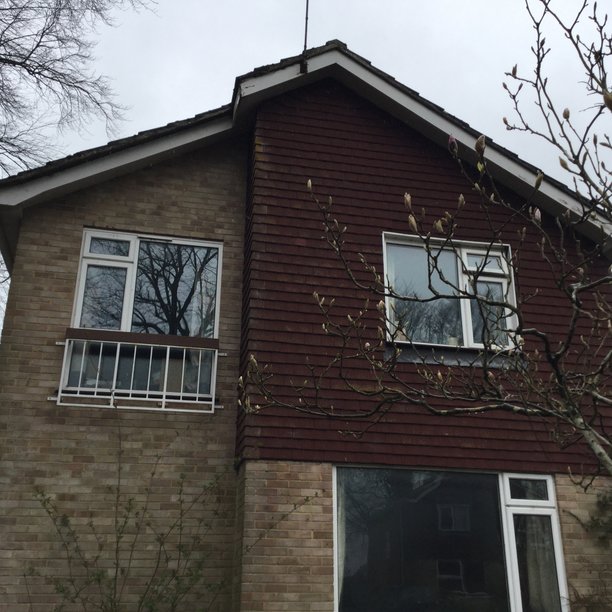
 We plan to move in September, from a house we will have lived in for 14 years. Before we came here, married life had seen us living in six different rented dwellings. We moved round the country and averaged two years in each. This house was purchased because we – certainly I – felt a strong need to stop and settle.
My parents, by contrast, bought a house soon after they married and lived in it for the rest of their life together. Visiting as an adult, I slept in the room which had been my childhood bedroom, its changing wallpaper marking the decades. Even now, if I wake in the depths of the night with odd, sleep-laden disorientation, that’s the room which first comes to mind. It is the ur-bedroom, from which all others are merely derivatives.
Mum moved, as so many older people do, because family life had ended and looking after the house itself had become a burden. That’s the contradiction with owner occupancy, and possibly with family life. It’s something we desire and invest heavily in – financially, obviously, and also with time and with emotion. We cocoon ourselves in houses, shaping them to match and meet our needs. The longer we stay, the more secure we feel, putting down layers of memories and peopling the place with ghosts of our own past. Creating a home. The shadows of long-dead pets slide round corners; old toys linger in the attic; children’s books, out-grown wellies, school reports, odd receipts and scouting badges are interleaved with the immediate diurnal detritus. These tangible memories are comforting and sustaining. They validate what has been created and help us to define our identity.
But the paradise can become our prison. The longer we live in one place, the harder it is to leave. I have seen too many heart-broken widows who need, for their own sake, to move to somewhere where they can cope better – somewhere smaller, closer to family and friends, with more support. Yet leaving is a physical wrench, tearing themselves away from the rooms they have decorated, the gardens where their children played, the skirting boards and shelves and doors that that their husband installed, or fixed, or botched.
I also worry about making my children homeless. Is it not an essential function of a home to serve as their repository of nostalgia? To provide the root and base from which they can sever themselves with careless abandon, sloughing outgrown clothes and ‘A’ level textbooks and Lego castles with the sublime confidence that – should they turn around and look back – the discarded can still be recalled. But that is defining the house, and myself, only in terms of nurturing the new generation. It suggests that our proper role now is merely to be an empty nest.
I’m resisting that (and so, fortunately, are our children). My instinctual conviction that the family home should remain static is constrained by my own experience. We are, instead, acting on another gut feeling that there is yet another stage of development for us all.
Some natural tears they dropt, but wiped them soon;
The world was all before them, where to choose
Their place of rest, and Providence their guide:
They, hand in hand, with wandering steps and slow,
Through Eden took their solitary way
(Paradise Lost, Book XII)
Our new journey starts in September.
 lesleyjonesberry